
.webp)
By Aderonke Ojo
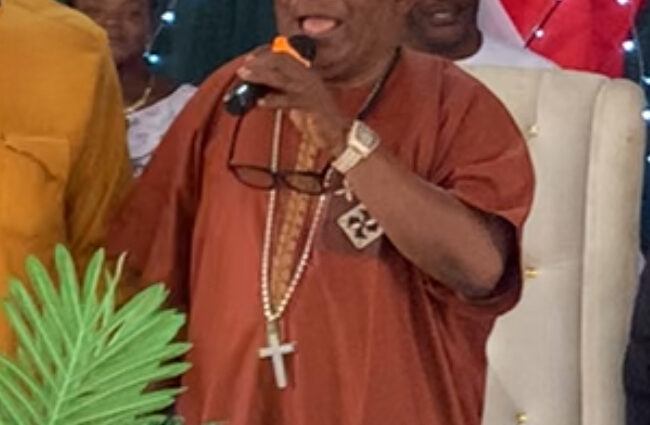
Bishop Dr. Emmanuel Afolabi, founder and presiding bishop of Christ the Rock of Ages Evangelical Gospel Mission, has raised concern over the rising vandalism of public infrastructure across Nigeria, warning that the destruction of government property undermines national development and the country’s future.
He emphasizes youth engagement to prevent vandalism, promote national development, and urges government to create empowerment programs for Nigerian youth.
The cleric , who spoke on Wednesday in an interview in Abuja, specifically cited the vandalism of solar-powered streetlights, highway facilities and bridge installations, describing the trend as a major setback to public investment and public safety.
He challenged Nigerian youths to take ownership of the nation’s future, urging them to see public assets as collective property rather than government possessions to be destroyed.
“If young people destroy government property today, what will they use tomorrow when it is their turn to lead?” he asked.
According to him, meaningful youth engagement remains a critical solution to vandalism and social unrest.
He argued that widespread unemployment and lack of opportunities have pushed many young people into destructive activities.
“If the youths are engaged, they will not have time to vandalise public property,” Mr Afolabi said. “The future of Nigeria is in their hands, but the government must also create jobs and provide an enabling environment for them to thrive.”
While acknowledging that the government may not be able to employ every young person, he stressed the importance of deliberately engaging a substantial percentage of the youth population in productive ventures, noting that gainfully employed youths could positively influence others.
Afolabi called on the federal government to develop structured and well-defined youth empowerment programmes rather than ad hoc initiatives.
He referenced Libya’s former farm settlement schemes as an example of how state-led programmes could productively engage young people and strengthen national development.
“Nigeria has very industrious and hardworking youths,” he said. “What they need is a clear template and a definite programme, not guesswork.”
He urged policymakers to prioritise youth-focused interventions as a long-term strategy to curb vandalism, reduce social vices and secure Nigeria’s future.
He thanked God for what he described as divine faithfulness to Nigeria and its people, noting that while 2025 has been both “very good and very challenging,” Nigerians must not lose faith in the nation’s future.
“Nigeria is our country. We have no other country. We are not running, we will not run, and we will not ‘japa’ because this nation belongs to us all,” he said. “What we are passing through now is just a phase in the life of Nigeria, and we believe this phase will soon pass.”
The cleric expressed optimism that the country would overcome insecurity and economic hardship, saying Nigerians would once again be able to live and travel without fear of kidnapping, banditry or insurgency.
“We believe that God can change situations and even the hearts of leaders,” he said. “Before the end of this government’s tenure, Nigeria will return to a state where people can walk and travel freely, day or night, without fear.”