
By Aderonke Ojo
The Nigeria Volleyball Federation (NVBF) has intensified its clean sport drive by organising an Anti-Doping Information and Education Seminar for volleyball players competing at national and international levels.
The programme took place on Thursday at the Indoor Sports Hall, Package B, of Moshood Abiola National Stadium, Abuja, for the clubwho are participating at the ongoing NVBF 2025 Super Cup where they were advised to take anti-doping education seriously, as ignorance of the rules offers no defence against sanctions.
The session brought together players and officials—male and female—from over 10 clubs participating in the Super Cup, all of whom were reminded that understanding anti-doping regulations is a fundamental responsibility of every elite athlete.
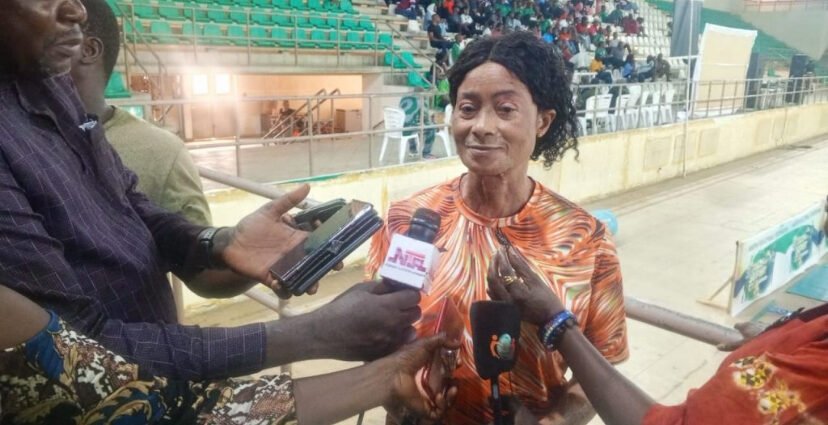
Speaking at the Anti-Doping Information and Education Seminar organised by the NVBF Medical and Anti-Doping Committee, the Committee Chairman, Mrs Chinedu Odozor-Onikeku, said the initiative was designed to sensitise volleyball players on anti-doping rules and safeguard their careers in line with global best practices.
She explained that observations during training and warm-up sessions had revealed gaps in athletes’ knowledge of proper nutrition, recovery and medication use, which could negatively affect performance and expose them to anti-doping violations.
According to her, many athletes are unfamiliar with doping control procedures because they have never undergone testing, making the process seem strange or intimidating when encountered for the first time.
Mrs Odozor-Onikeku stressed that early and continuous education is essential to help athletes become comfortable with testing protocols and understand what is expected of them.
She also advised participants to be mindful of what they consume, including food, supplements and medications, noting that ignorance does not excuse violations under global anti-doping rules.
Looking ahead, she emphasised the need to sustain the programme by integrating anti-doping education into regular training schedules and competition calendars.
She reaffirmed the Federation’s commitment to prioritising clean sport and athlete education, expressing confidence that consistent awareness programmes would better prepare Nigerian volleyball players to compete responsibly and confidently on the global stage.
In his lecture, former National Sports Commission Director of Medicine, Dr Paul Onyedo, warned that athletes found guilty of doping cannot rely on excuses or pleas for leniency, stressing that knowledge remains the only safeguard.
He noted that reaching the national level comes with responsibilities beyond performance on the court, insisting that athletes must be well-informed about anti-doping regulations.
Dr Onyedo explained that violations—whether intentional or accidental—can ruin careers, adding that claims of “I didn’t know” are unacceptable at elite level, as ignorance is neither admissible nor excusable under anti-doping laws.
Participants were encouraged to keep and study the educational materials distributed at the seminar, which provide a concise guide to what every athlete must know.
He likened failure to understand anti-doping rules to scoring an own goal, warning that in this case, the damage is inflicted on one’s own career. Coaches, athletes and sports officials were reminded that everyone involved in sport has a duty to understand and comply with anti-doping regulations.
The lecture also highlighted the role of the World Anti-Doping Agency (WADA), described as the global watchdog in the fight against doping. Athletes were urged to familiarise themselves with WADA, its website and educational resources.
Explaining the importance of the World Anti-Doping Code, Dr Onyedo likened it to a holy book from which all anti-doping rules and judgments are derived.
He concluded by urging athletes to take ownership of their education, warning that a lack of anti-doping knowledge at elite level could lead to severe consequences and derail promising sporting careers.
On his own, a member of Anti Doping Committee on NVBF and Chairman of Media Commission Godspower Odedede described the anti-doping education seminars as a major step forward for the growth and professionalism of volleyball in the country, assuring that the programme will be sustained through regular training and structured activities.
He said the initiative reflects a collective responsibility within the volleyball family in Nigeria to ensure that athletes are properly guided and protected as they compete at higher levels.
“This is a new dawn for volleyball in Nigeria. This is the first time such a comprehensive medical and anti-doping programme is being organised for our players across different levels,” the official stated, noting that the seminar marked a significant milestone in athlete education and welfare.
According to him, the Federation is committed to making anti-doping education a continuous process rather than a one-off event. He explained that regular training sessions would be organised to ensure that players are well-informed and do not fall victim to avoidable anti-doping violations in the future.
“To sustain this programme, members of the Medical and Anti-Doping Committee are working closely together to design more activities that will build on what we have started,” he said. “Our aim is to ensure that all our players are properly educated and protected.”
He further revealed that a detailed programme outlining upcoming medical and anti-doping activities would be released in due course to keep the media and the public informed about the Federation’s plans.
On doping control testing, the he confirmed that the Federation is working towards implementing testing procedures in collaboration with the appropriate bodies and qualified personnel.
“Yes, testing will be carried out when necessary. We are working seriously towards partnering with the right authorities to ensure that testing is done properly and in line with international standards,” he assured.