
.webp)
By Aderonke Ojo
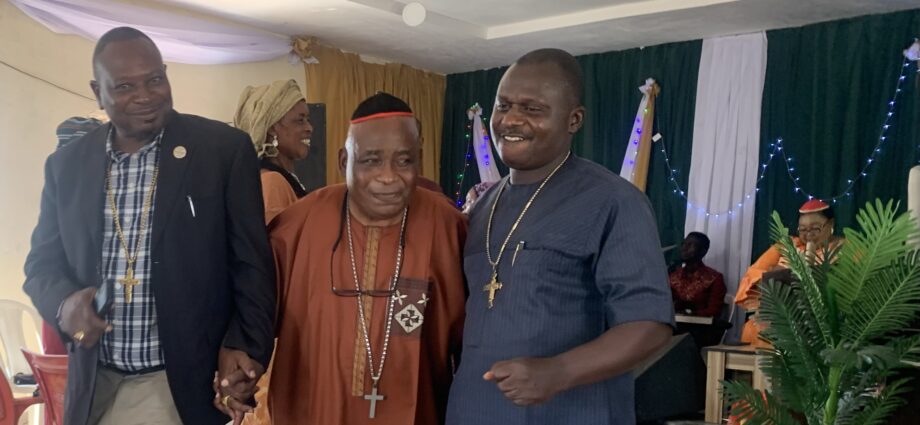
Bishop Dr,Sam Moses Tukura, has called on Christians to embrace genuine thanksgiving and societal responsibility, urging Nigerians not to take life, health, and freedom for granted on Sunday in Abuja.
He made the call while preaching at the annual thanksgiving service of Christ the Rock of Ages Evangelical Gospel Mission, held in Passo, Gwagwalada Area Council of the Federal Capital Territory (FCT), Abuja.
Speaking to a large congregation, Bishop Tukura cautioned against superficial expressions of gratitude to God, drawing from the biblical account of the ten lepers healed by Jesus, only one of whom returned to give thanks.
“Jesus healed ten lepers, but only one came back to say thank you. Heaven is still asking today, ‘Where are the nine?’” he said.
“We often get too familiar with God’s goodness. We wake up healthy, we have family, we have life, yet we forget to say, ‘Father, thank you.’”
Using relatable illustrations, the cleric reminded worshippers that life itself is an unearned gift.
“If life was sold like recharge card, many of us would be broke. But God gives it freely. Many people died on the same road you passed through today, yet you are alive. Do you not have a reason to thank God?” he asked.
Bishop Tukura emphasized that thanksgiving should not be reduced to religious routine but must flow from sincere reflection and compassion.
“Let thanksgiving not be a ritual. Let it come from a grateful heart. Like Solomon, let us ask for wisdom and thank God for His blessings,” he said.
The cleric also expressed gratitude to God for what he described as a recent victorious engagement at the University of Jos, noting that the experience strengthened his resolve to continue preaching messages that inspire hope and service.
Beyond the pulpit, Bishop Tukura used the occasion to shed light on the plight of inmates in Nigerian correctional facilities, drawing from his long-standing humanitarian work.
He disclosed that during a recent visit to Suleija Correctional Centre, he encountered 17 inmates detained solely because they could not afford a ₦5,000 fine, despite having been tried by the court.
“These people were not in prison because they were convicted of serious crimes. They were there because they could not pay ₦5,000,” he said.
According to him, through collaborative efforts, 15 of the inmates were able to regain their freedom, noting that two had already been assisted by other individuals before their intervention.
Some of the inmates, he recounted, were arrested while carrying out routine activities such as buying food.
“One said he went to buy suya; another said he went to buy bread. They were arrested around 9 p.m and taken round until 1 a.m. Nobody to speak for them,” he narrated.
Bishop Tukura also expressed concern over children born and raised in prison environments.
“I saw three children born inside the prison. Not because they committed any offence, but because their mothers were arrested while pregnant. The children are growing up behind bars,” he said.
He described the situation as a reflection that demand urgent attention.
Highlighting the condition of female inmates, Bishop Tukura revealed that Suleija Prison currently houses about 47 women, many of whom lack basic necessities such as sanitary pads.
“Most times, their problems are little things—sanitary pads and basic care. When we visit them, it gives them hope,” he said.
He called for stronger collaboration among faith-based organisations, media houses, and humanitarian agencies.
“We need synergy. If we don’t go there, we won’t know their problems. The media, charity organisations, and religious bodies must partner to support those who need help more than even those of us living freely,” he added.
Bishop Tukura noted that the prison outreach is carried out through the Imams and Pastors Interfaith Forum for Peace, adding that the group has been involved in such interventions for over a decade, and formally as an organisation for the past five years.
He disclosed plans to return to Suleija and Gwagwalada correctional centres on December 27, to distribute relief materials and encourage inmates.
Concluding his message, the bishop urged Nigerians to reflect deeply on their blessings in the face of widespread suffering.
“The world is full of terrible things. The shelter over our heads, the freedom we enjoy—most times we take them for granted,” he said.
The thanksgiving service was marked by enthusiastic participation from church members, who described the event as “beautiful,” “impactful,” and spiritually uplifting.